Monday February 06, 2006

THE STOCKERS!
All New ARTIN Stocker Series

It is not often that I get really excited about a new release, but in this case I cannot help but share my enthusiasm about the latest models from Artin. Although these models will not appeal to everyone in our hobby, Artin slot cars have become a huge favorite of beginners along with scratchbuilders everywhere. Inexpensive, yet have a great deal of potential to be transformed into virtually any model you want to make. These cars are designed and built using this same approach so let us take a closer look at these brand new hot rods.


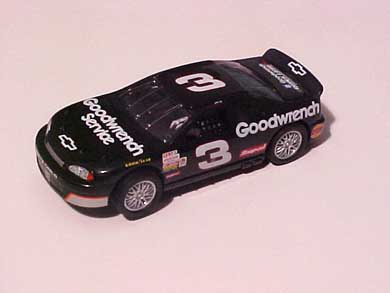
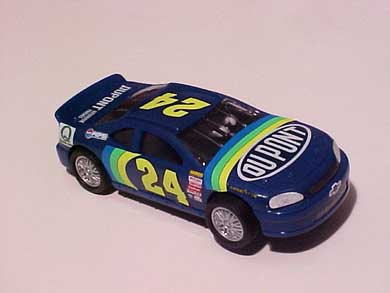
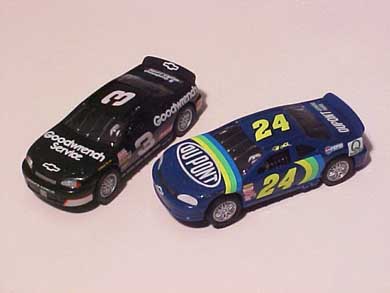
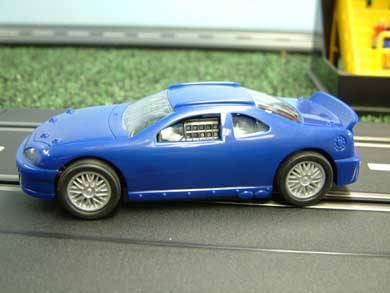
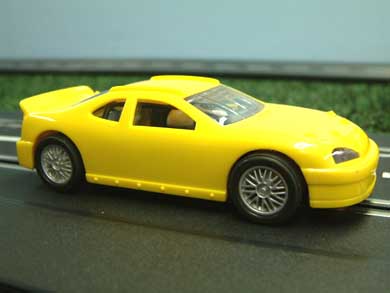
Before the "prototype police" dismiss these cars, keep in mind they were never designed to be exact scale replicas. Artin officially calls these models "Stockers", and that is just what they represent. The body is a generic shape that very closely resembles the prototype, yet is not really any specific brand of car. For some, this might be a glaring issue yet keep in mind that many young racers are not at all concerned about fine scale detail.

Overall body shape and design is more than enough for my personal tastes as well. In fact, over the years I have witnessed advanced enthusiasts re-paint many models to depict their favorite driver regardless that the brand of car was different. The reason is, or at least in my eyes, is that the cars all look very similar to one another. And once painted and detailed represent the prototype well enough...especially at SPEED.

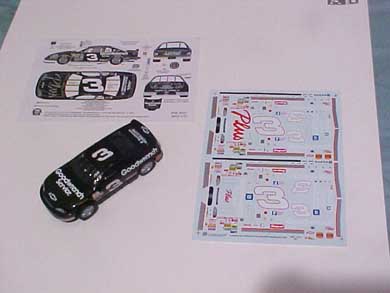
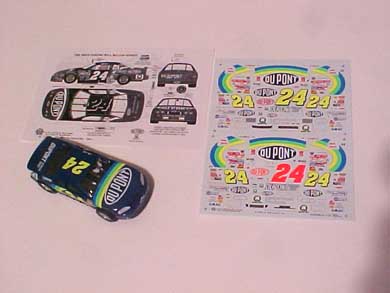
ARTIN will have 8 solid colors to choose from: Red, Green, Blue, Black, Yellow, Silver, Orange, and of course White. This is a great added benefit to many as it gives future car builders a wide variety to start with. It is also perfect for the beginner as even without any markings you can race up to 8 lanes with different cars. Separate peel and stick decal sheets will also be available with generic numbering.

The decal sheets are very simple and easy to use. They are peel and stick which makes things very easy for younger racers or parents to quickly decorate the models. The decal sheet has a color reference to them on the sheet letting you know which car they are for. In all honesty, you can mix and match them to suit your tastes so there is no wrong way in doing them. There are plenty of numbers included in case one wears off or you make a mistake and damage one. Again, for the younger racers these decals are more than enough.

These decals also have another use. Enthusiasts who enjoy scratch-building can certainly use these inexpensive decals for various projects. Being peel and stick, it makes detailing quick and easy, and the thickness of them is not as heavy as I expected so after you clear-coat them they will look very close to standard water-slides.

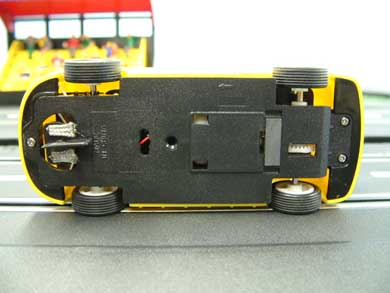
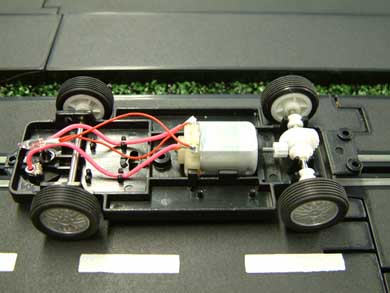
Underneath we see that these cars utilize the exact same chassis design most all prior ARTIN models have used. A small, mild magnet is held in place underneath that provides just enough magnetic down-force. I have witnessed many younger racers (and older too) that find the light magnet and mild motor a blessing. Not everyone agrees with this concept, but I can only report what I have witnessed over the years at numerous trade and hobby shows along with our own local racers who frequent our tracks.

3 screws mount the chassis to the body and are easily removed. Inside there was a change that some may notice. Artin has added capacitors and resistors in the wiring. This is most likely due to several factors such as their digital system and restrictions to reduce RF interference. In any event they do not reduce the performance of the motor. The model is still equipped with a 9 tooth pinion and 27 tooth crown gear. The interior is a half-tray type design and adds just enough scale appeal for a budget model. The driver is easily painted to match any livery you choose. I like this interior as it allows those advanced enthusiasts plenty of room inside for tuning options.

I was concerned that the wheels and tires would share some of the out of round issues that we have seen on earlier cars. Out of the box I could see that the tires needed to be re-seated to get them on the wheel flush. Once I did this, I took the cars to the track for the very first run. This is not really a major issue here as many other cars made by other makers need the same treatment if not more. Tire sanding was also needed to get the tires as flat and true as possible. Again, a quick tune-up process performed on almost every car on the market. Once I sanded them I was ready to get started in the testing.

The car acted just as I expected. It ran just like many Artin releases, in fact slightly better. There was a slight hop in the car up front, but nothing drastic. I re-sanded the front tires and this smoothed things out a great deal. We ran over 500 laps with these models with a variety of set-ups and I was pleased with the performance. On our Artin road course we had a lap time average of 5.0 seconds. These cars will not win any land speed records, but the overall control of them made for some very fun fender banging!

No, these cars will not keep pace with the heavy magnet cars Scalextric has released, but I did not expect them to. These cars are designed to run against each other and in that regard they provide very close and even racing. We tested these cars at different voltages and used a variety of controllers. 12 volts was more than enough to allow these cars plenty of power. One aspect of these models is durability. We crash tested these models and they withstood a great amount of abuse with no signs of damage. For some parents and racers out there, this is a huge benefit.

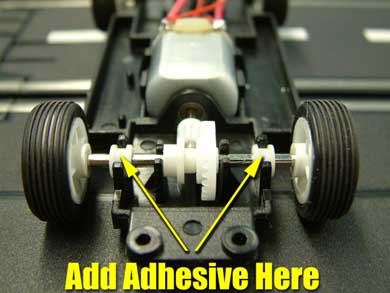
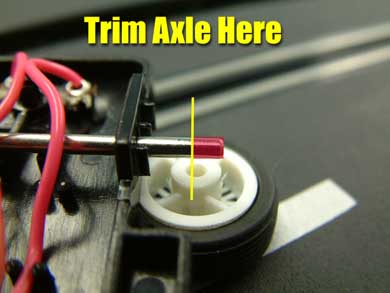
An item that advanced enthusiasts might want to adjust is the front axle side-to-side free-play. I have seen this on many other cars costing more than twice as much, and the answer is simple. Take the front wheel off on one side and trim the axle to the desired length. The wheels are easily twisted off and I took a cut-off disc in my Dremel and shaved just a slight amount until I had it sitting where I wanted it. After I test fitted the distance, I added a small drop of Super glue on the end and pressed the wheel in place.

The wheels are also the correct size to allow current after-market tires to be used. I tested IndyGrips #1003 and this made a nice upgrade as they are a much wider tire. I still like the original rubber compound, but the IndyGrips did smooth out the overall performance.

At a suggested retail price of $22.95 these models offer a great low-cost slot car to not only beginners, but advanced enthusiasts who wish to build their own. I see many racers upgrading wheels, tires, gears, motors, guides etc, on models that cost twice as much. The chassis will also be available separately at a suggested retail price of $14.95, so if these are modifications you are going to make anyway, it makes good sense dollar wise to simply start with a less expensive platform. In this regard the Artin chassis by itself offers a lot to enthusiasts.

I am happy with this release as I am a huge fan of stock car racing. I now have a low-cost alternative to begin painting and building a nice fleet of models based on my favorite drivers. Again, these models will not appeal to everyone and are in no way perfect, but they are nice enough for my tastes and fill a void that has for too long been ignored in our hobby.

I recommend these cars to virtually anyone in our hobby. They are detailed more than enough for the younger racers you might happen to have at your track, plus are easy on your wallet. If you enjoy the tuning aspect of our hobby, or have a tight budget, I would advise you give these models a second look. You may find that they can be more fun than you ever expected.

- Harry

As always feel free to contact me about this article or just the hobby in general at harry@homeracingworld.com, or better yet drop into our Message Forum and share your thoughts with other enthusiasts!

Thanks go to ARTIN North America & Slot Car World For Allowing Us A Sneak Peek Of These New Models!